← Back to Learn Hub

Foundation · Circuits

The Circuit Groups

Circuits organize channels into groups that share a common theme. Individual circuitry is oriented toward mutation and empowerment. Collective circuitry is oriented toward sharing patterns and experience. Tribal circuitry is oriented toward support, resources, and community bonds. Understanding which circuits are active in your chart reveals broader themes operating through your definition.

| What Are Circuits?

A circuit is a group of channels in the Bodygraph that share a common theme and purpose. While each channel has its own specific energy, the circuit it belongs to provides the broader context for how that energy operates. Circuits are the organizational layer between individual channels and the whole Bodygraph.

The 36 channels are organized into three main circuit groups: Individual, Collective, and Tribal. The four Integration channels stand on their own. Each group has sub-circuits that express more specific themes within the broader group.

Understanding your circuitry helps reveal whether your definition is primarily oriented toward mutation and empowerment, sharing and contribution, or support and provision. Most people carry channels from multiple circuit groups, creating a unique blend of these life themes.

Group Sub-Circuits Theme Channels
Individual Knowing + Centering Mutation, empowerment 11
Collective Understanding + Sensing Sharing, contribution 14
Tribal Tribal Circuit + Defense Support, resources 7
Integration - Self-empowerment, survival 4

| Individual Circuit Group

The Individual circuitry carries the theme of mutation and empowerment. Individual energy is acoustic. It transforms through frequency rather than explanation. People with strong Individual circuitry march to their own beat. Their energy is not primarily oriented toward sharing or support, but toward uniqueness and mutation. In that uniqueness, Individual circuitry can have a transformative effect on the world around it. The Individual circuit group contains two sub-circuits: Knowing and Centering.

Knowing Circuit

The Knowing Circuit carries the theme of individual knowing, insight, and awareness that arise without logical explanation. This is intuitive, mutative energy expressed and recognized in highly individual ways.
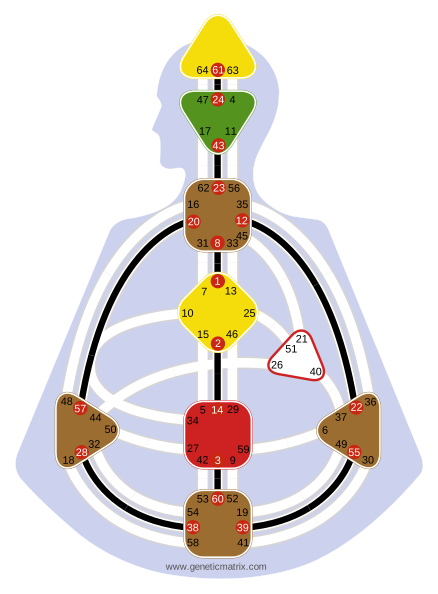
Knowing Circuit - Individual Circuit Bodygraph diagram showing highlighted channels

Channels in the Knowing Circuit

03-60
Channel of Mutation

The design of energy that initiates and fluctuates, melancholy and mutation through pulse.

39-55
Channel of Emoting

The design of moodiness, the emotional wave that provokes spirit and creativity.

28-38
Channel of Struggle

The design of stubbornness, finding purpose and meaning through life's challenges.

02-14
Channel of the Beat

The design of a keeper of keys, the direction and resources that drive individual purpose.

20-57
Channel of the Brainwave

The design of penetrating awareness, intuitive clarity expressed spontaneously in the now.

01-08
Channel of Inspiration

The design of a creative role model, individual creative expression that inspires others.

12-22
Channel of Openness

The design of a social being, expressing emotions and feelings through creative articulation.

23-43
Channel of Structuring

The design of individuality, translating unique knowing into concepts others can understand.

24-61
Channel of Awareness

The design of a thinker, inner knowing that seeks to rationalize unique insights.

Centering Circuit

The Centering Circuit carries the theme of self-love, direction, and empowered behavior. It is the smallest circuit and is rooted in individual identity, conviction, and the power of being yourself. Rather than focusing on sharing with the collective or supporting the tribe, this circuit is concerned with living from your own nature and empowering others through authentic self-expression and self-directed action.
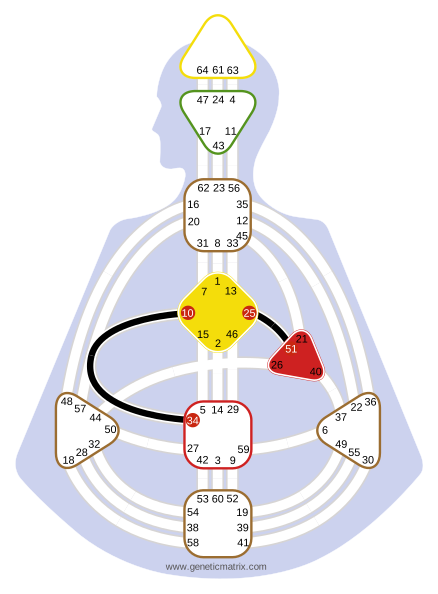
Centering Circuit Bodygraph diagram showing highlighted channels

Channels in the Centering Circuit

25-51
Channel of Initiation

The design of needing to be first, the competitive spirit that initiates through shock.

10-34
Channel of Exploration

The design of following one's convictions, behavior empowered by the Sacral for self-discovery.
| Collective Circuit Group

The Collective circuitry carries the theme of sharing. Collective energy is designed to be shared with everyone. It is not personal. The Collective shares in two distinct ways: through logical patterns (Understanding) and through experiential cycles (Sensing). Together, these two circuits account for the largest number of channels in the Bodygraph.

Understanding Circuit (Logic)

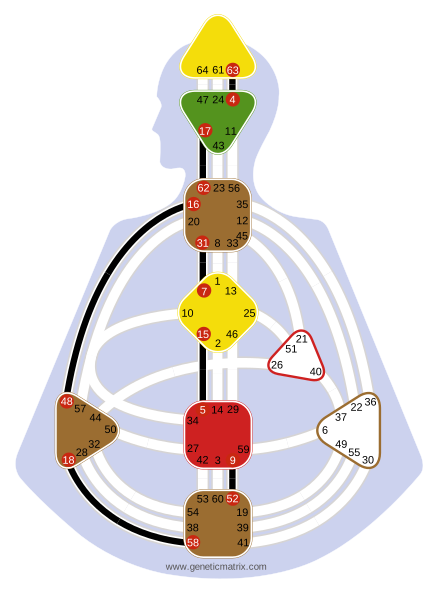
The Understanding Circuit carries the theme of patterns and proof. This circuitry processes information by recognizing repeatable patterns, testing them, validating them, and projecting into the future based on what can be proven. It is oriented toward what might work for everyone. Logic is future-focused and concerned with correction, refinement, and improvement.

Understanding (Logic) Circuit Bodygraph diagram showing highlighted channels

Channels in the Understanding Circuit

04-63
Channel of Logic

The design of mental ease mixed with doubt, pressure to question that drives logical inquiry.

17-62
Channel of Acceptance

The design of an organizational being, opinions formed through recognizing logical patterns.

16-48
Channel of the Wavelength

The design of talent, depth of skill developed through repetitive practice and mastery.

18-58
Channel of Judgment

The design of insatiability, the drive to correct and perfect patterns for the vitality of life.

09-52
Channel of Concentration

The design of determination, focused energy for attending to details with stillness and discipline.

05-15
Channel of Rhythm

The design of being in the flow, fixed life rhythms connected to universal timing patterns.

07-31
Channel of the Alpha

The design of leadership, influencing the direction of the collective for the future.

Sensing Circuit (Abstract)

The Sensing Circuit carries the theme of experience and reflection. Where Logic looks to the future through patterns, Abstract energy processes the past through cycles of experience. This circuitry moves through desire, experience, and reflection, feeling life fully and sharing the wisdom gained. It is always in motion and oriented toward what has been.

Sensing (Abstract) Circuit Bodygraph diagram showing highlighted channels

Channels in the Sensing Circuit

47-64
Channel of Abstraction

The design of mental activity mixed with clarity, making sense of the past through inner visualization.

11-56
Channel of Curiosity

The design of a searcher, stimulating ideas that share beliefs and experiences through storytelling.

35-36
Channel of Transitoriness

The design of a jack of all trades, seeking new experiences emotionally through the crisis of inexperience.

13-33
Channel of the Prodigal

The design of a witness, listening and reflecting on experience to share as wisdom.

30-41
Channel of Recognition

The design of focused energy, the emotional pressure of desire and fantasy that initiates new experience.

42-53
Channel of Maturation

The design of balanced development, the pressure to start and the energy to bring experiences to completion.

29-46
Channel of Discovery

The design of succeeding where others fail, committing fully to experience and discovering purpose through the body.

| Tribal Group

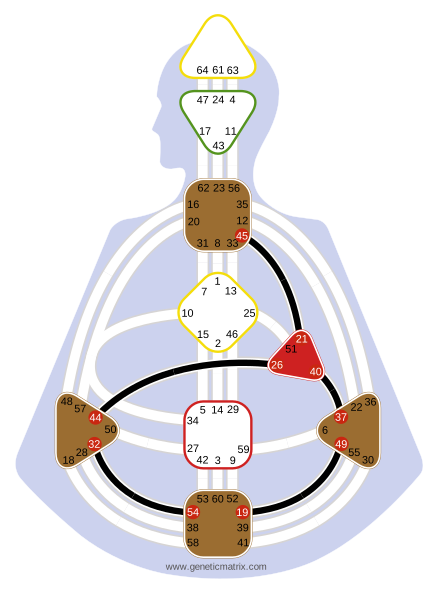
The Tribal circuitry carries the theme of support, loyalty, and resources. Tribal energy is fundamentally about making deals. It operates through bargains, agreements, and material bonds. Where Individual energy mutates and Collective energy shares, Tribal energy protects and provides. It is deeply rooted in survival through community, bonds, and material support. The Tribal group contains two sub-circuits: the Tribal Circuit and the Defense Circuit.

Tribal Circuit

The Tribal Circuit is centered around the Heart/Will Center and carries the theme of willpower, material resources, and community bonds. This circuitry drives the tribe's material well-being through deals, contracts, and commitments. The Heart Center's willpower is the engine of this circuit, providing the energy to make promises and keep them.

Tribal Circuit Bodygraph diagram showing highlighted channels

Channels in the Tribal Circuit

21-45
Channel of Money

The design of a materialist, the will to control resources and provide for the community.

32-54
Channel of Transformation

The design of being driven, ambition and continuity through tribal transformation and material success.

19-49
Channel of Synthesis

The design of sensitivity, emotional awareness of tribal needs and the principles of acceptance and rejection.

37-40
Channel of Community

The design of being a part seeking a whole, the bargain of emotional support in exchange for material provision.

26-44
Channel of Surrender

The design of a transmitter, the instinct for recognizing quality and the will to sell it to the tribe.

Defense Circuit

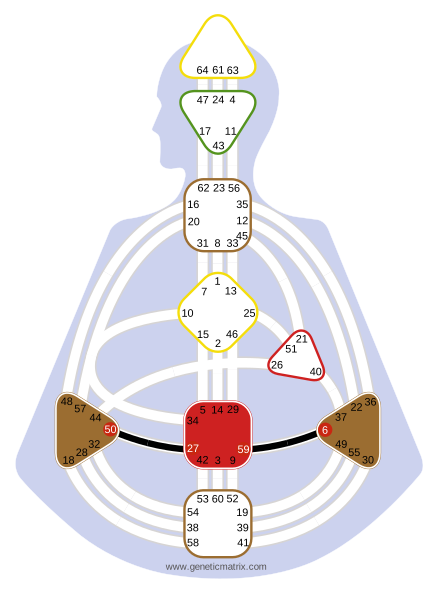
The Defense Circuit carries the theme of protection, nurturing, and intimacy. Where the Tribal Circuit is about material resources and willpower, the Defense Circuit is about the physical bonds that hold the tribe together, including sexuality, nurturing, and the protective instinct. It is deeply connected to the body's survival mechanisms.

Defense Circuit Bodygraph diagram showing highlighted channels

Channels in the Defense Circuit

06-59
Channel of Mating

The design focused on reproduction, intimacy, fertility, and the emotional wave of bonding.

27-50
Channel of Preservation

The design of custodianship, the instinct to nurture and preserve the values and well-being of the tribe.

| Integration Channels

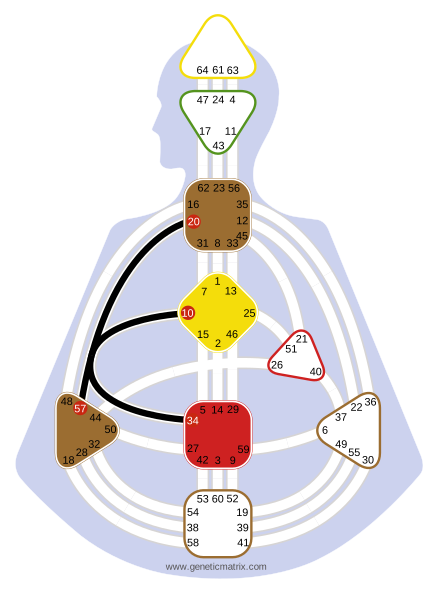
The Integration Channels stand apart from the three circuit groups. They are not part of Individual, Collective, or Tribal circuitry. These four channels are focused purely on individual survival and self-empowerment. They connect the Sacral, Spleen, G Center, and Throat in a tightly interconnected cluster oriented toward self-contained survival. Integration energy is the most self-contained circuitry in the Bodygraph.

Integration Channels Bodygraph diagram showing highlighted channels

The 4 Integration Channels

34-57
Channel of Power

The design of a human archetype, intuitive survival power operating purely in the moment.

20-34
Channel of Charisma

The design where thoughts must become deeds, responsive Sacral power expressed immediately through the Throat.

10-57
Channel of Perfected Form

The design of survival, behavior guided by splenic intuition for physical well-being.

10-20
Channel of Awakening

The design of commitment to higher principles, self-expressed behavior in the moment.

The Integration Channels are unique in the Bodygraph because they do not connect to a broader circuit group. They represent a highly self-contained form of survival and empowerment. Integration energy is highly self-contained and focused on immediate survival, empowerment, and responsiveness.

| Circuit Themes at a Glance

Circuit Keyword Direction Frequency
Knowing Empowerment Inner knowing outward Acoustic, mutative
Centering Self-love Identity and direction Individual rhythm
Understanding Sharing patterns Future-oriented Logical, repeatable
Sensing Sharing experience Past-oriented Cyclical, emotional
Tribal Willpower Material provision Bargains and deals
Defense Protection Nurturing and intimacy Physical bonds
Integration Self-empowerment Self-contained survival Immediate, present

| Frequently Asked Questions

What is a circuit in Human Design?
A circuit is a group of channels in the Bodygraph that share a common theme and function. Circuits organize the 36 channels into larger groups based on how energy operates. The three main circuit groups are Individual, Collective, and Tribal, while the four Integration channels stand on their own. Understanding your circuitry reveals broader themes operating through your defined channels.
How many circuits are there in Human Design?
There are three circuit groups, six sub-circuits, and four Integration channels in Human Design. The Individual group contains the Knowing Circuit (9 channels) and the Centering Circuit (2 channels). The Collective group contains the Understanding Circuit (7 channels) and the Sensing Circuit (7 channels). The Tribal group contains the Tribal Circuit (5 channels) and the Defense Circuit (2 channels). The four Integration channels stand on their own outside those circuit groups.
What is the difference between Individual, Collective, and Tribal circuits?
Individual circuits carry the theme of mutation and empowerment, expressing unique knowing and creative energy that transforms without needing explanation. Collective circuits carry the theme of sharing, either through logical patterns (Understanding) or experiential cycles (Sensing). Tribal circuits carry the theme of support through resource management, loyalty, and community bonds. Each group processes energy differently, and most people carry channels from multiple groups.
What are the Integration channels?
The Integration channels are four channels focused on individual survival and self-empowerment: the Channel of Power (34-57), the Channel of Charisma (20-34), the Channel of Perfected Form (10-57), and the Channel of Awakening (10-20). They do not belong to any circuit group and represent highly self-contained energy in the Bodygraph.
Does the circuit a channel belongs to change its meaning?
Yes. The circuit provides the broader context for how a channel's energy operates. A channel in the Individual circuit works through mutation and empowerment. In a Collective circuit, it is oriented toward sharing patterns or experiences. In a Tribal circuit, it is oriented toward loyalty, support, and material bonds. The circuit is the larger theme within which each channel fulfills its specific function.

| Other Learn Topics

Explore Your Circuitry

Generate your free chart and discover which circuit groups are active in your design. See the broader themes that shape how your energy flows.

Get Pro →